Fokker-VFW-614
A German Short-Haul Jet with Unconventional Engineering
The Fokker-VFW-614 was a unique regional jet developed in West Germany during the late 1960s and early 1970s. Designed for short-haul operations from poorly prepared runways, it incorporated several unconventional engineering solutions that set it apart from its contemporaries.
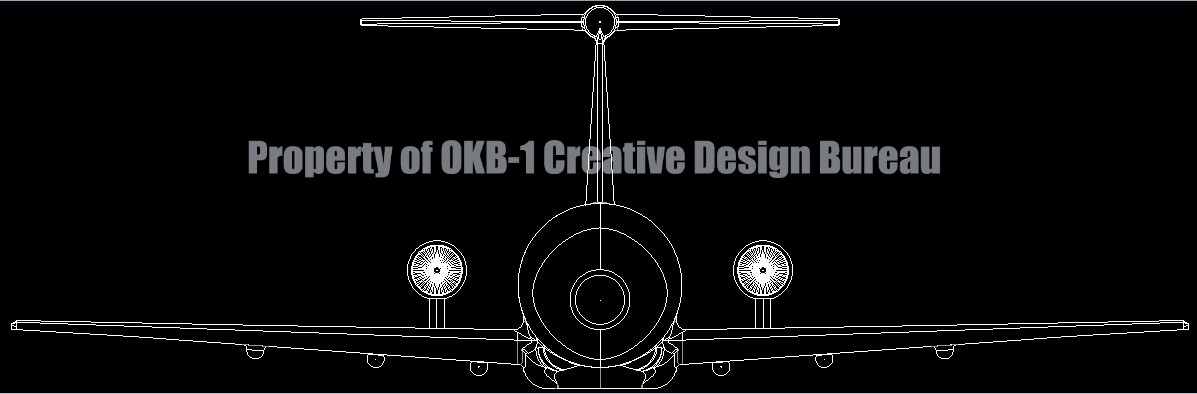
Most notably, the Fokker-VFW-614 mounted its engines above the wing, reducing foreign object damage (FOD) risk while enabling operations from rough and semi-prepared airfields. Though produced in limited numbers, the aircraft became an important technological stepping stone—particularly through its later use as a flight research platform.
This repository preserves the Fokker-VFW-614 family in CAD form, including production variants and the extensively modified ATTAS test aircraft, reconstructed with engineering-grade fidelity. From this point on, the term VFW-614 will be refer to Fokker-VFW-614.
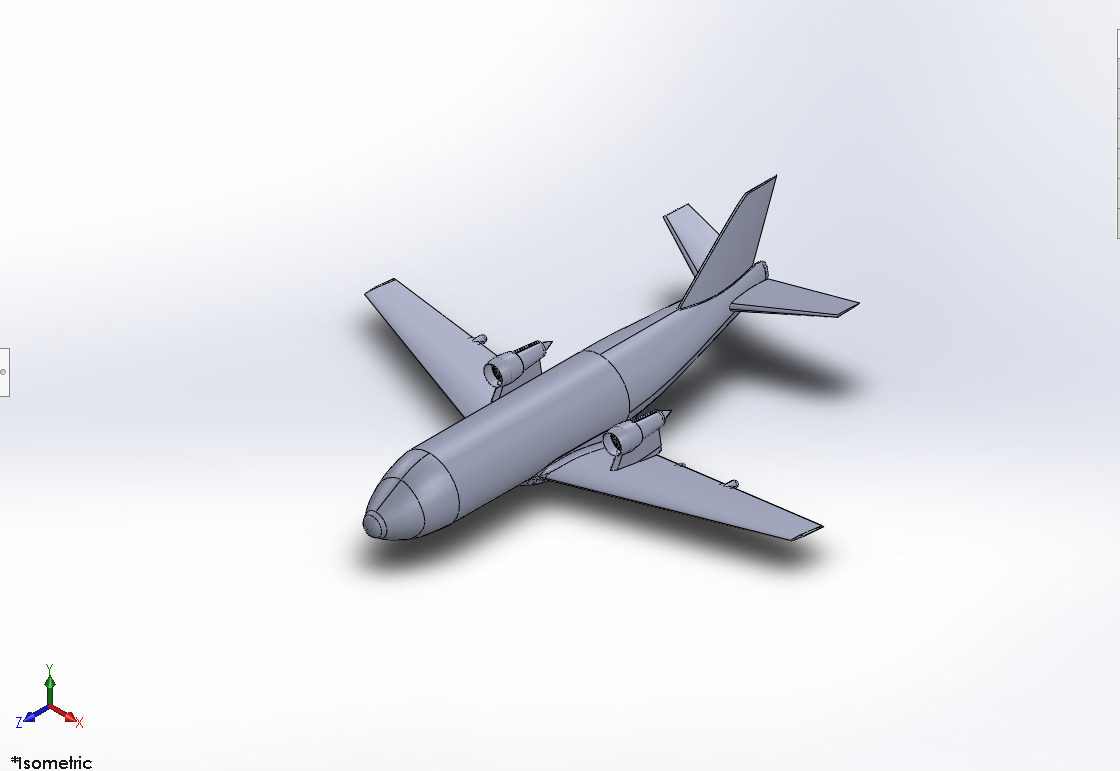
Aircraft Family Overview
The VFW-614 was produced in a small number of closely related variants, all sharing a common airframe but differing in role and equipment:
- VFW-614 Prototype – Early conceptual aircraft validating the unconventional configuration and T-tail configuration
- VFW-614 Production Variant – Standard regional transport configuration
- VFW-614 ATTAS – Advanced Technologies Testing Aircraft System, extensively modified for fly-by-wire research
Each variant is documented as a separate subpage, using consistent structure and terminology.
Design Philosophy
The VFW-614 was engineered around several core objectives:
- Rough-field capability
- Reduced FOD risk through over-wing engine placement
- Short takeoff and landing performance
- Low ground servicing requirements
- Compatibility with small regional airports
These requirements drove a configuration that diverged sharply from most regional jets of its era, resulting in a distinctive aerodynamic and structural layout.
CAD Reconstruction Approach
All models in this project are created as engineering-grade CAD geometry, not visualization meshes. Fully lofted NURBS surfaces:
- Solid-body fuselage, wing, and nacelle geometry
- Parametric structure allowing dimensional analysis
- Cross-sections exportable for DXF / DWG
- Variant-specific geometry changes preserved
The goal is geometric and aerodynamic fidelity, suitable for study, comparison, and fabrication workflows.
Subpages
VFW-614 Prototype
Configuration Validation and Early Design Concept. The prototype VFW-614 aircraft were drawn to validate the feasibility of the over-wing engine configuration and short-field performance goals.
Key Characteristics
Early fuselage configuration with development instrumentation. Initial wing geometry prior to later refinements. Prototype-specific T-tail and pylon shaping. Structural accommodations for test equipment. Flight-test oriented systems layout
CAD Notes
The prototype model preserves early-stage geometry, highlighting differences from later production aircraft. These include T-tail transitions, nacelle integration details, and fuselage proportions that were refined during certification.
This variant is particularly useful for studying configuration risk mitigation and early aerodynamic decision-making.
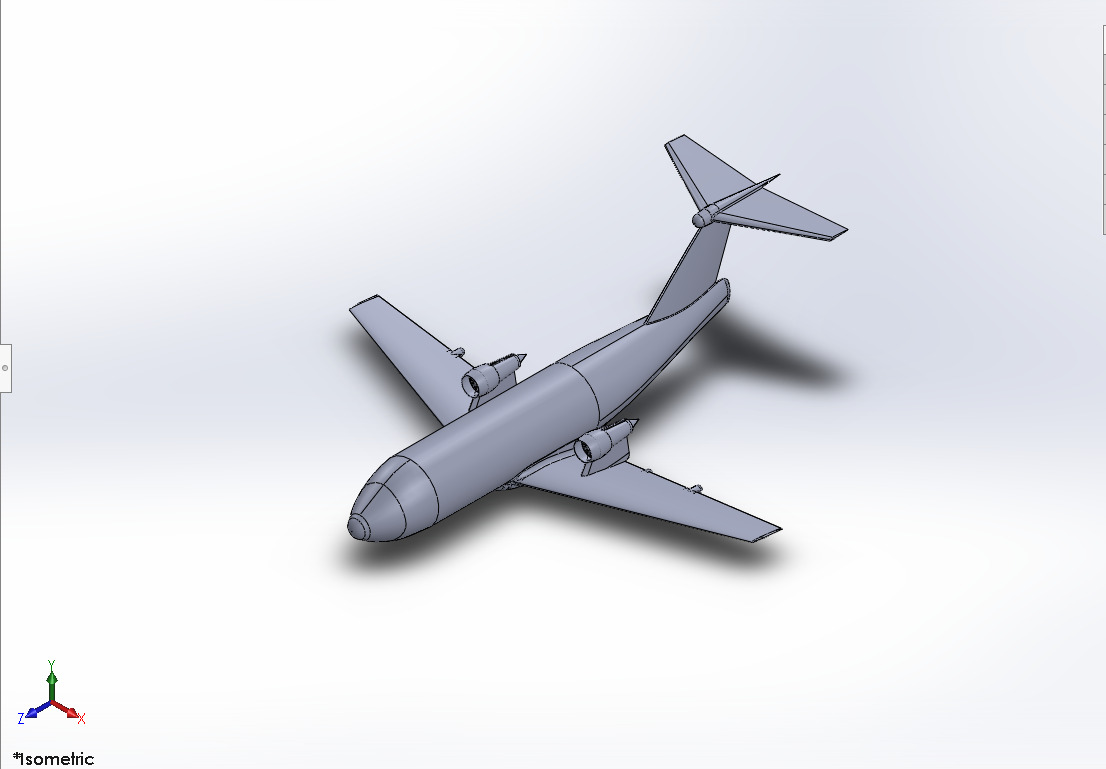
VFW-614 Production Variant
Main Article: VFW-614 Main Series
Regional Transport Configuration, The production VFW-614 represents the finalized regional airliner configuration, optimized for commercial short-haul operations.
Design Features
Refined wing geometry with improved lift distribution. Production-standard fuselage layout. Over-wing engine installation optimized for noise and FOD reduction. Conventional tailplane with optimized control authority. Landing gear designed for rough-field operation
Operational Context
The aircraft was intended for:
- Short regional routes
- Secondary airports
- Operations with minimal ground infrastructure
Although commercial success was limited, the production VFW-614 demonstrated that unconventional configurations could meet certification and operational requirements.
CAD Fidelity
Production-accurate fuselage lofts. Finalized wing-to-fuselage integration. Correct nacelle positioning and incidence. Fully solid, parametric geometry
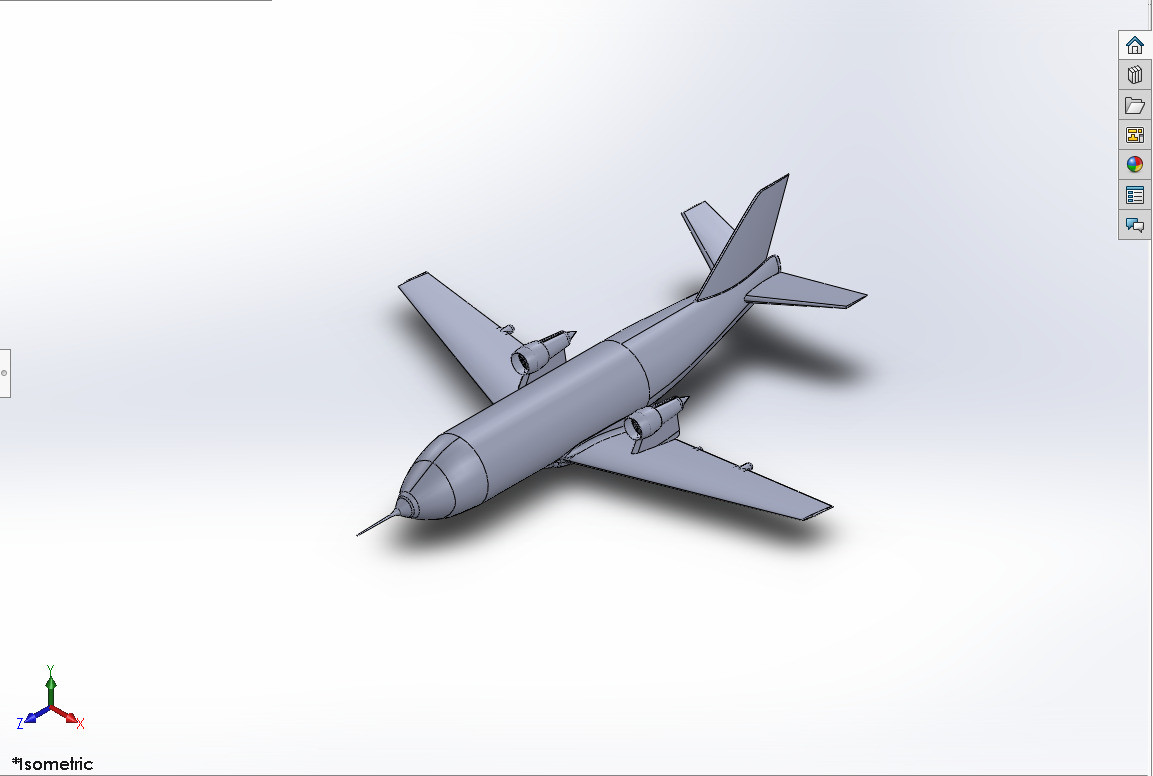
VFW-614 ATTAS
Advanced Technologies Testing Aircraft System. The ATTAS variant represents the most technically significant evolution of the VFW-614. Operated by DFVLR / DLR, it was transformed into an advanced flight research aircraft and played a major role in European fly-by-wire development.
Purpose
ATTAS was designed as an in-flight simulator, capable of emulating the handling characteristics of other aircraft through advanced control laws.
Major Modifications
Fly-by-wire control system, Modified cockpit with experimental interfaces, External sensors, probes, and instrumentation, Structural reinforcements for research payloads, Software-defined flight control behavior,
Engineering Significance
ATTAS contributed to:
- Fly-by-wire validation
- Handling-qualities research
- Control-law development
- Human-machine interface testing
It served as a stepping stone toward later European aircraft programs using digital flight controls.
CAD Reconstruction Focus
Variant-specific external geometry, Instrumentation and probe integration, Structural changes distinct from production aircraft, Accurate preservation of research configuration
This model intentionally differs from the production variant, reflecting the aircraft’s role as a flying laboratory rather than a transport.
Why the VFW-614 Matters
Despite limited production, the VFW-614 occupies an important place in aerospace history:
- Demonstrated alternative engine placement strategies
- Influenced thinking on regional jet operations
- Served as a critical fly-by-wire research platform
- Bridged civil transport and experimental research domains
Preserving the aircraft in CAD form allows these contributions to be studied beyond photographs and general descriptions.
Repository Intent
This project is intended for:
- Aerospace engineers and students
- Flight-control and aerodynamics researchers
- CAD and geometry enthusiasts
- Modelers and fabricators
- Aviation historians