VC-10 Series 1100: The Prototype Reborn
Main Article: VC-10 Prototype Series 1100
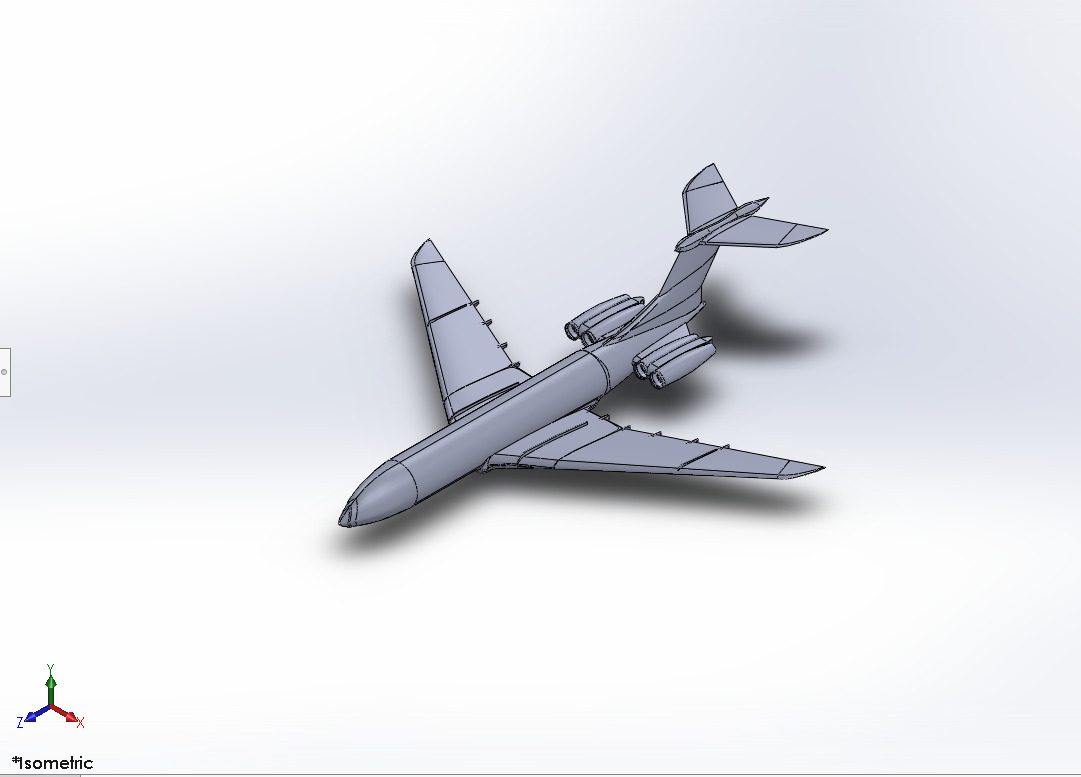
The Series 1100 is the very first VC-10 prototype, digitally resurrected to showcase the aircraft that started it all. This was the testbed that proved the concept, laying the groundwork for the production airliners and military variants that followed. Our CAD model preserves every nuance of this historic aircraft, combining historical accuracy with engineering-grade precision.
Design and Aerodynamics
The Series 1100 captures the prototype’s experimental spirit. Unlike later production models, the design was raw, unrefined, and exploratory—perfect for understanding the evolution of the VC-10. Key features include:
- Fuselage: Original prototype length, preserving the authentic proportions that first took to the skies.
- Wingtips: Squarish and distinctive, reflecting the early aerodynamic experiments before refinement in later models.
- Engine nacelles: Bulkier than production variants, a faithful nod to the dragier configuration of the prototype.
- Wing-fuselage connection: Less streamlined than future iterations, showcasing the engineering challenges solved in later designs.
- Engine platform: Traditional airfoil shape, without the drag-reducing “bulge” covers seen on production aircraft.
- Wing root chord: Thinner than the Series 1102 and subsequent models, capturing the prototype’s original aerodynamic layout.
These characteristics highlight the raw engineering and design decisions that informed all subsequent VC-10 variants.
Historical Inspiration
Every detail of this CAD reconstruction is rooted in historical reference, inspired by G-ARTA, the aircraft that first proved the VC-10’s potential. This is more than a model; it is a digital preservation of aviation history, allowing users to explore the prototype as it truly existed.
CAD Precision and Engineering Fidelity
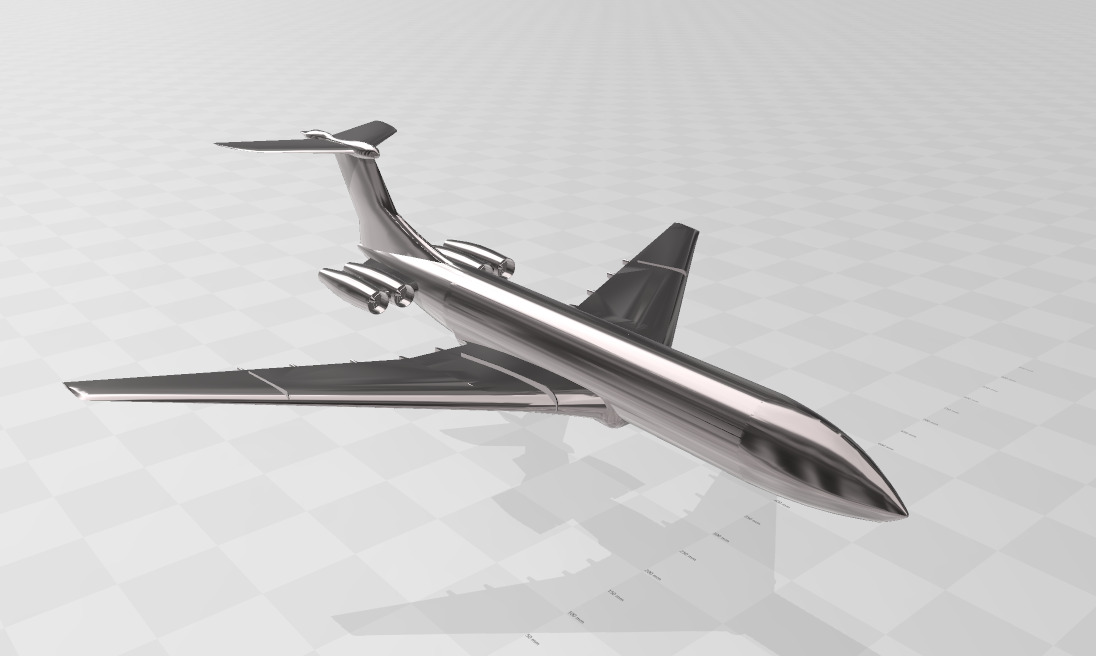
Our CAD model is built to engineering-grade standards, using parametric, NURBS-based lofting to reconstruct the entire airframe as solid geometry.
- Fuselage and wings: Solid lofted NURBS geometry capturing the original prototype shape.
- Engine nacelles and pylons: Accurate aerodynamic forms reflecting the raw design.
- Cross-sections and structure: Exportable in DXF/DWG for engineering analysis or 3D printing.
This approach preserves the exact form and aerodynamic intent of the prototype, making it ideal for analysis, visualization, and reproduction.
Operational Significance
The Series 1100 was a crucial milestone in aviation history. As the VC-10’s first flight prototype, it provided invaluable data that guided the development of later commercial and military variants.
Why It Matters
Preserving the Series 1100 in CAD form ensures that this historic aircraft is accessible to future generations. Whether for aviation historians, engineers, or makers, this model provides a faithful digital record of the VC-10’s origins.
VC-10 Series 1102: The Classic Airliner
Main Article: VC-10 Series 1102
The Series 1102 is the definitive VC-10—the model that brought this iconic British airliner into widespread commercial service. While often referred to as the “generic” VC-10, it is anything but ordinary. This series represents the culmination of lessons learned from the prototype, refined into a reliable, elegant, and high-performing airliner that became the backbone of BOAC and other operators’ fleets.
Design and Aerodynamics
Compared to the Series 1100 prototype, the Series 1102 incorporated numerous aerodynamic refinements:
- Fuselage: Standard production length, perfectly representing the main commercial VC-10 layout.
- Wing design: Fully optimized with smoother wing-fuselage connections and slightly wider root chords, enhancing lift and stability.
- Engine nacelles: Streamlined for lower drag, featuring early “bulge” covers developed after prototype testing.
- Wingtips: Sleek, swept, and aerodynamically refined compared to the squarish prototype tips.
- Overall balance: A harmonious combination of performance, efficiency, and passenger comfort, defining the classic VC-10 silhouette.
These improvements allowed the Series 1102 to achieve better cruise efficiency, reduced fuel consumption, and more stable handling.
Operational Significance
The Series 1102 was the workhorse of commercial VC-10 operations:
- BOAC fleet: Most widely recognized operator, providing transcontinental service with the hallmark VC-10 speed and elegance.
- Other airlines: Adopted in limited numbers, cementing the VC-10’s reputation as a high-performance, mid-sized jetliner.
- Passenger experience: Quiet cabin, smooth ride, and distinctive T-tail design made the Series 1102 a favorite among passengers.
CAD Precision and Historical Accuracy
This CAD model is built to engineering-grade standards, with all major components lofted as solid NURBS geometry:
- Fuselage and wings: Fully lofted solids capturing the production geometry.
- Engine nacelles and pylons: Precisely shaped for aerodynamic fidelity.
- Cross-sections and structure: Exportable in DXF/DWG for design analysis or 3D printing.
Why It Matters
The Series 1102 embodies the classic VC-10 experience. Preserving it in CAD form ensures that this important chapter of aviation history is accessible for historians, engineers, and modelers alike. It is the definitive, recognizable VC-10, bridging the prototype and later variants.
VC-10 Series 1106: The Military Workhorse
Main Article VC-10 Series 1106
The Series 1106 represents the VC-10 at its most refined stage, adapted for the Royal Air Force. This wasn’t just a civil airliner in military livery—it was a purpose-built aircraft optimized for transport, troop movement, and aerial refueling.
Design and Aerodynamic Refinements
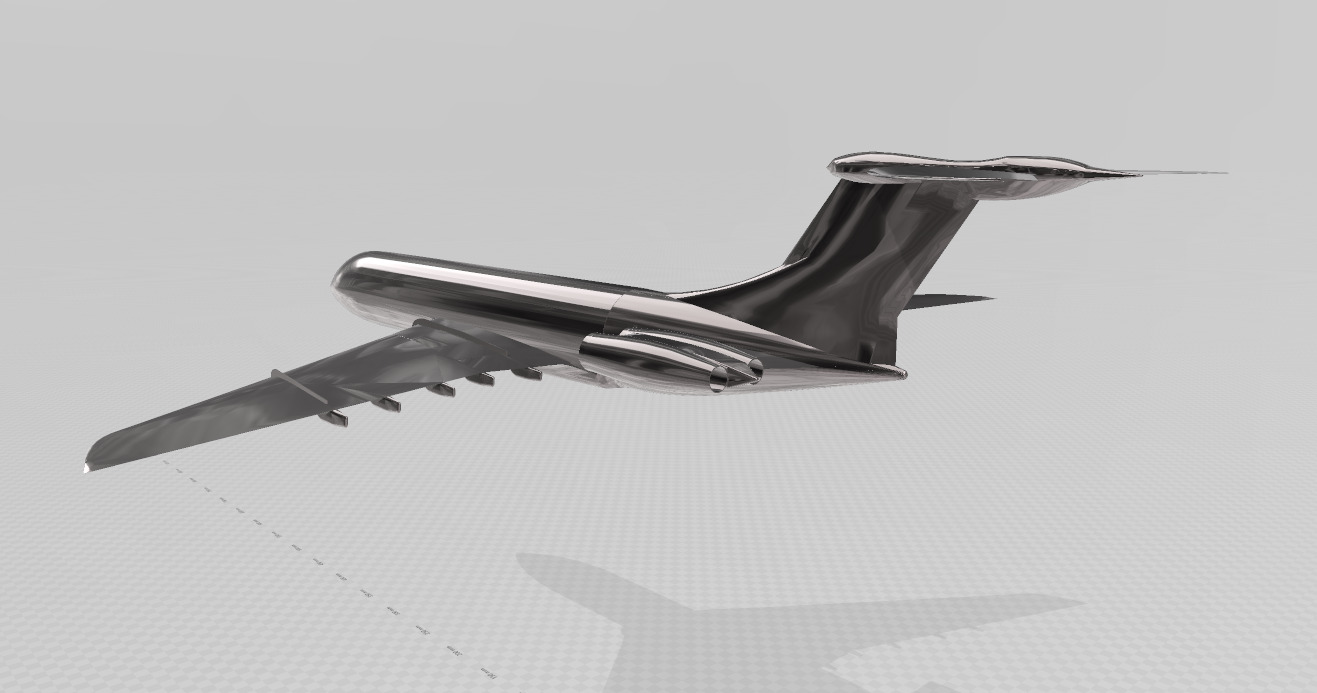
Building on lessons from Series 1100 and 1102, the Series 1106 incorporated all aerodynamic improvements:
- Engine nacelles: Fully refined trailing-edge design, more pointed and streamlined than 1102, reducing drag.
- Wing design: Optimized wing-fuselage integration with slightly wider root chords and improved curvature.
- Fuselage: Reinforced and slightly longer to accommodate military payloads.
- Overall aerodynamics: Smooth, continuous curves and fully integrated control surfaces enhanced handling, performance, and fuel efficiency.
Operational Significance
The Series 1106 served in multiple RAF roles:
- Transport: Troops, equipment, and VIPs over long distances.
- Tanker conversions: Adapted for in-flight refueling.
- Military reliability: Maintained civil-era speed and comfort while meeting military logistics demands.
CAD Precision and Historical Accuracy
Built with parametric, NURBS-based lofting, preserving every curve and surface as solid geometry:
- Fuselage and wings: Mathematically precise solids reflecting military reinforcements.
- Engine nacelles and pylons: Aerodynamically optimized trailing-edge shapes.
- Cross-sections and structure: Exportable as DXF/DWG for analysis or 3D printing.
Why It Matters
The Series 1106 represents the culmination of VC-10 evolution, bridging civil elegance and military utility while preserving aerodynamics and design fidelity.
VC-10 Series 1151: The Super VC-10 – The Iconic Form
Main Article: Super VC-10 Series 1151
The Series 1151, or Super VC-10, is the ultimate expression of the VC-10 lineage—the aircraft most people visualize when they hear the name VC-10.
Historical Background
The Super VC-10 was conceived as an evolution of the original production VC-10, designed with a stretched fuselage and updated systems to transport more passengers comfortably over longer distances.
Operational Legacy
Although produced in limited numbers, the Super VC-10 became the flagship of the VC-10 family, instantly recognizable for its elegance, speed, and high capacity.

Design and Engineering Details
- Fuselage: Fully lofted solid geometry, perfectly proportioned to the stretched design.
- Wings: Optimized sweep and root chords to support the heavier airframe.
- Engine nacelles: Trailing-edge, pointed, and aerodynamically refined.
- Tail assembly: Iconic T-tail recreated with precision.
- Cross-sections: Exportable for study or fabrication. Why It Matters
The Super VC-10 is a symbol of British aerospace engineering, mid-century elegance, and timeless design. Digitally preserved, it allows study, appreciation, and recreation of the VC-10 at its most iconic.
VC-10 Series 1400: The “What-If” Vision of a Shorthaul Horse
Main Article: Proposed Shortened VC-10 Series 1400
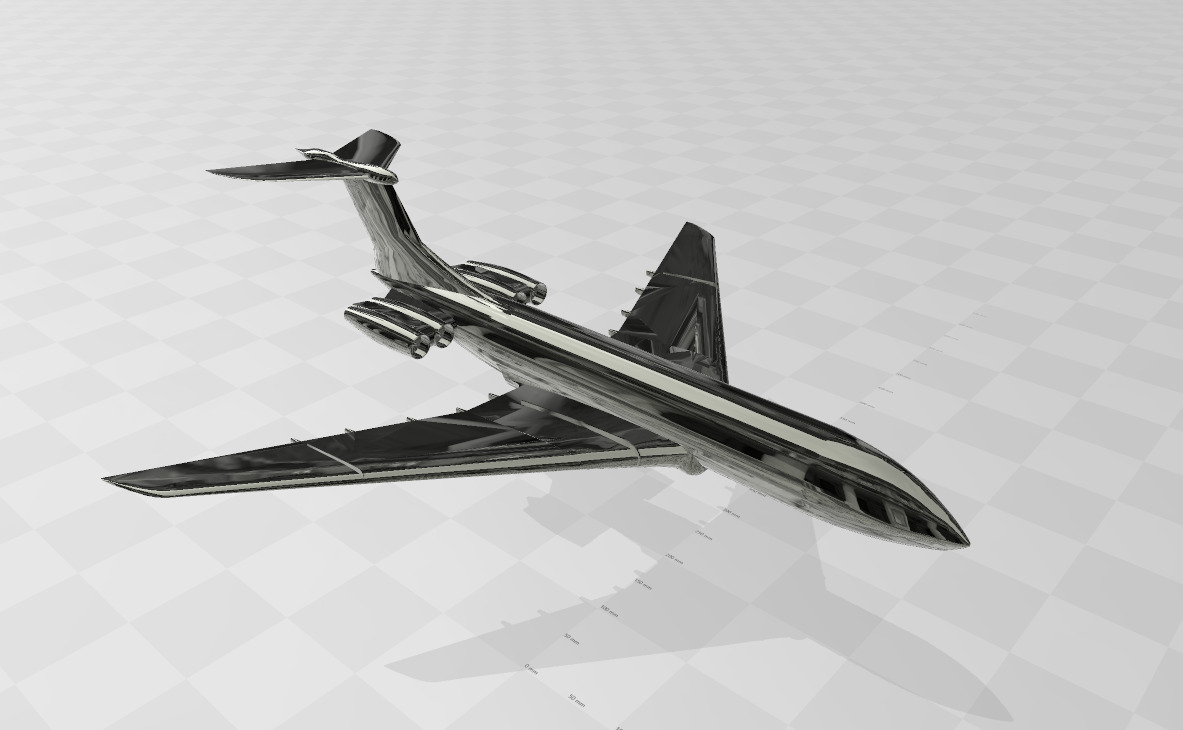
The Series 1400 is a conceptual, never-built variant—a “what-if” exercise imagining a shorter, more agile VC-10.
Concept and Inspiration
- Fuselage: Shortened by 2 meters from series 1102, 6 meters from series 1151.
- Wingbox-fuselage connection: Enlarged and reinforced to handle shorter landing strips and correct rear-heavy balance.
- Engine nacelles: Refined like 1106 with 1151 streamlining, maintaining aerodynamic efficiency.
- Other features: Maintains T-tail, wing design, and overall proportions from previous series, making it unmistakably a VC-10.
Design Philosophy
The Series 1400 demonstrates the power of CAD to bring non-existent aircraft to life, allowing exploration of alternate fuselage lengths, structural reinforcements, and aerodynamics.
Why It Matters
Although never built, the Series 1400 lets enthusiasts, engineers, and modelers explore alternate VC-10 futures, blending imagination with historical design logic. It preserves the VC-10 family heritage while daring to imagine what could have been.
What You Can Do With These Packs
Depending on the pack you choose, you can:
- 3D print the aircraft
- Build RC laser-cut models
- Perform CAD or CFD analysis
- Render it in Blender
- Create posters, stickers, and merch
- Study the engineering form
This product line is divided into clear “factory-floor” production tiers for different users: 3D printers, CAD engineers, RC builders, artists, and hobbyists.
Pack A — 3D Printing Pack (STL + 3MF Only)
Includes:
- High-resolution STL of the aircraft
- Included Custom Aircraft Stands
- Clean watertight mesh suitable for resin or FDM printing
- 3MF file for layout reference
- Aerodynamic, smooth loft surfaces just like wind tunnel models
- Ready for slicing (Cura, PrusaSlicer, Bambu Studio, Orca-Slicer)
- Optional: scaled versions (1:150, but can be re-sized as 1:72, 1:144, 1:48, etc.)
Perfect for: Collectors · Modelers · 3D printer hobbyists
Pack B — RC Maker Pack (DXF + 3MF)
Includes:
- Full DXF cross-section slices (wing + fuselage) for laser cutting
- Up to ~50 fuselage stations
- Wing rib sections
- Clean orthographic section cuts
- 3MF file for RC layout reference
Perfect for: RC aircraft builders · Laser-cut foam/balsa makers · Workshops

Pack C — Engineering Pack (CAD Only)
Includes:
- Full STEP 214 file (solid bodies + surfaces)
- Full IGES file (solid bodies + surfaces)
- Full CATIA file (solid bodies + surfaces)
- Complete aircraft with precise NURBS lofts
Suitable for:
- SolidWorks
- Fusion 360
- CATIA
- Creo
- Siemens NX
Engineering-grade geometry
- Perfect for editing, CFD pre-processing, and derivative design work
- 3MF file for layout reference included
Perfect for: Engineers · Students · Aerospace researchers
Pack D — Merchandise Art Pack (DXF + PDF)
Includes:
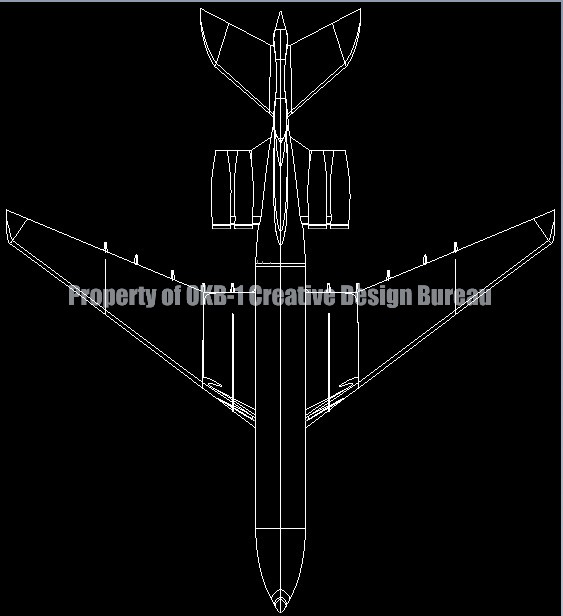
- Clean line-art views:
- 3-side view (top, side, front) + Bonus 1-side view (belly)
- Isometric view
- Provided in DXF + PDF
- PDF in both modern black-over-white diagram as well as negative-white-over-black diagram
High resolution, ready for:
- T-shirt designs
- Posters
- Stickers
- Wallpapers
- Classroom material
Perfect for: Artists · Merch stores · Classroom projects · Aviation fans
Pack E — Blender Artist Pack (OBJ + STEP + 3MF + GLB + GLTF)
Includes:
- OBJ + GLB file exported from CAD
- Ultra-smooth wind-tunnel-grade geometry
- STEP file included for those who want to re-export their own mesh
Ready to import into:
- Blender
- Cinema 4D
- Maya
- ZBrush
- 3MF file for layout reference included
Note: Untextured, raw CAD mesh. Perfect for sculpting, kitbashing, rendering, or custom livery painting.
Perfect for: Blender users · Render artists · Hard-surface kitbashers
Double Ultimate Pack
Includes EVERYTHING in Packs A–E with all aircraft listed here
- STL + 3MF 3D Print model
- DXF Cross Section Laser Cut RC
- STEP 214 + IGES + CGR Engineering model
- DXF + PDF + DWG Merch Poster
- OBJ + STEP + 3MF + GLB + GLTF Render Artist
See Other Available Variants:
- VC-10 Prototype Series 1100
- VC-10 Series 1102
- VC-10 Series 1106
- Super VC-10 Series 1151
- Proposed Shortened VC-10 Series 1400